Monday, April 22, 2019
an Oscar Wilde retrospective: the (un)Happy Prince
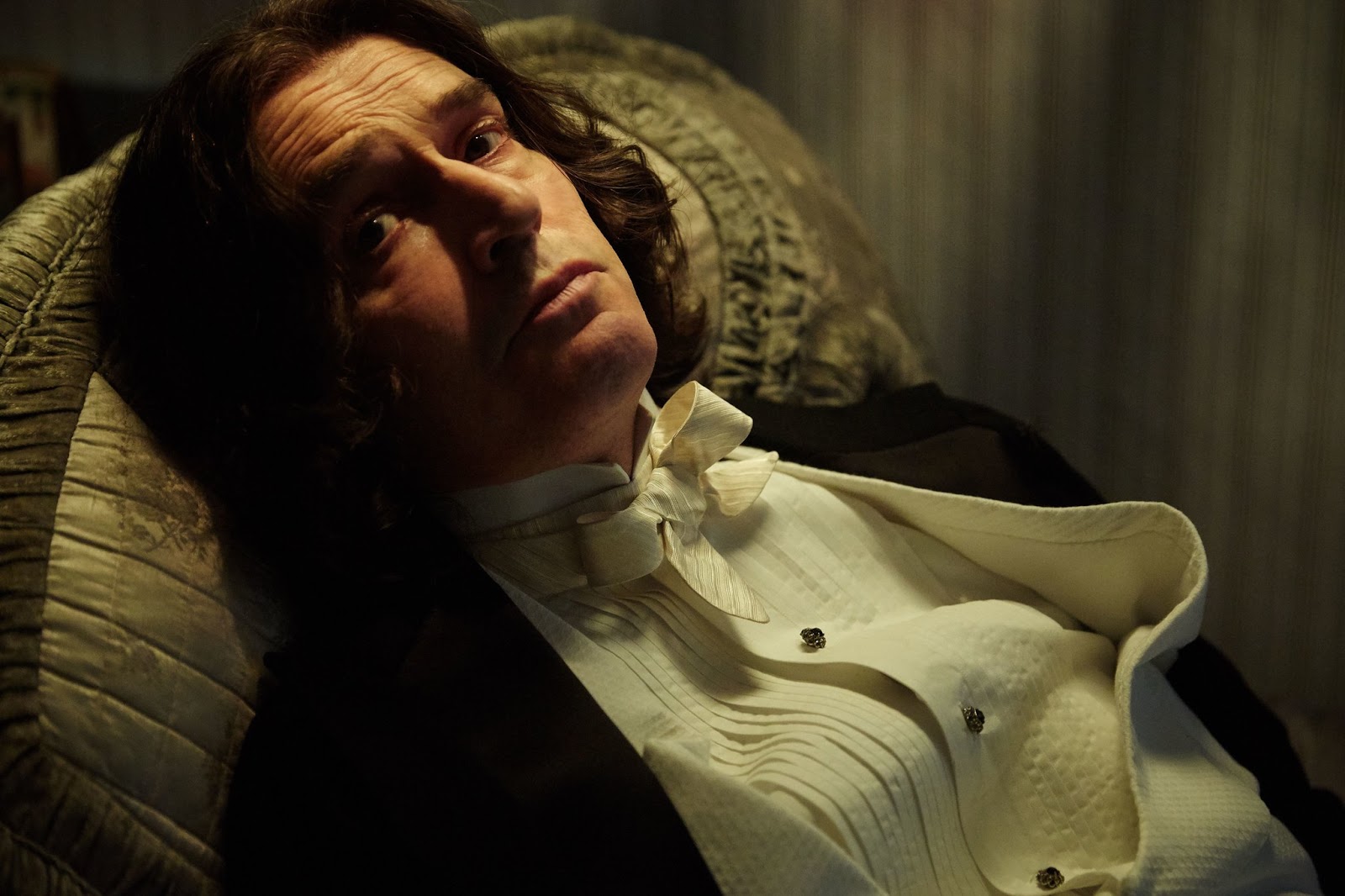
In a cheap Parisian hotel room Oscar Wilde (Rupert Everett) lies on his death bed. The film The Happy Prince chronicles Wilde’s destitute final years in France as a tangle of memory streams, boozy vignettes and flashbacks within flashbacks. As the audience, I am drawn to observe Wilde's failures with ironic distance, detachment and dark humour.
The film opens with Wilde in 1897 leaving a British prison after serving two years for gross indecency. There is an early flashback to him telling stories as he put his two sons to bed. The somewhat autobiographical story of the happy prince, a gilded statue who allows a swallow to denude him of all his gold to feed the poor permeated the movie. We then watch him wander, exiled and frequently penniless, through Dieppe and Naples before expiring of meningitis in Paris 3 years later. Contrasting flashbacks from the humiliation of his trial to the opening-night adulation underline the tragedy of his fall. We also experience the unrequited love triangle between Wilde, the beautiful and manipulative Bosie, Lord Alfred Douglas (Colin Morgan) and Wilde’s devoted literary executor Robbie Ross (Edwin Thomas). It seemed that Bosie left Wilde for younger and beautiful lovers, while Wilde played the unrepentant hedonist with the dutiful and loyal Robbie. Wilde treats his loyal allies with ungrateful negligence. While he maintains his male friendships with Robbie and Reggie Turner (Colin Firth), he cannot reconcile with his wife Constance (Emily Watson) and loses her financial support. He does however befriend a young Paris rent boy and his tough kid brother and holds them spellbound with his fairy-tale of the happy prince. It is the closest Wilde comes to any form of personal redemption, where he realises that love is the only thing worth worshipping.
To complement this sad and melancholic content, the film is filmed in dark and seedy alleyways, pubs and faded restaurants. The constant horror of humiliation and poverty is at odds with the characters' indulgent search for luxury.
So perhaps after all, there is a higher order explanation where polite society was prepared to turn a blind eye to homosexual affairs with the lower orders, who could be bought and bought off. It seems that Wilde's flaunted connection with the Queensberry family was a class transgression and his fatal flaw. So as a tragic genius, he lived and died for love.
Inspired and entertained by Woman at War
I was attracted by an Icelandic film with a female lead more than the actual title: Woman at War. I was pleasantly surprised as the war was a subtle environmental one and the woman, Halla (Halldóra Geirharðsdóttir) was a smart and talented fifty-year-old. The Icelandic scenery and the haunting music played by musicians across the country was also a pleasant surprise. Wherever she was, there was a trio nearby of poker-faced musicians. This film was spectacular at every level. It was an intelligent feel-good film that addressed real and urgent global issues with humour, music and a satisfying sense of justice.
Behind the scenes of her regular routine as a choir director, Halla led a double life as a passionate environmental activist, known as the Woman of the Mountain. In the opening scene we see her firing a bow and arrow across high power lines to cut power to the local aluminium smelter and protest against the energy corporations that are moving into Iceland. There are some wonderful cat and mouse scenes on wild moors where she hides from the helicopter under a mossy overhang. As she seeks help from local sheep farmers, we see their support for the environment. There is also a comic counterpoint, played by a wandering Spanish tourist named Juan (Juan Camilla Roman Estrada) who keeps cycling in the wrong place and is mistakenly identified for Halla’s crimes.
She continues her dramatic industrial sabotage with help from a Government insider but as American thermal cameras monitor Iceland's highlands from space, Halla is trying to decide if she should stop using her bow and arrow and issue the ecological manifesto she’s been planning. A surprise phone call reveals that an application Halla made years earlier to adopt a child has unexpectedly been accepted. A sprightly Ukrainian girl orphaned by war needs a mother. So Halla's challenge is whether she can risk being imprisoned when she’s responsible for a child already traumatized by the loss of one home. At the same time, a cappella trio of women in traditional Ukrainian folk dress sing up a storm at key decision-making points. With perfect timing, Halla’s twin, Asa, shows up although she has just agreed to join an ashram in India for two years. This sets the scene for a few interesting twists and turns. The final scenes offer a heart-warming resolution, but the environment wins out, in a lingering warning.
Friday, April 19, 2019
wet weekend escapism in The Aftermath
A Ridley Scott period drama set in Germany seemed like a cathartic wet weekend escape. Emotional scenes at opposite platforms of Hamburg's main station, several months apart begin and close this dramatic film. In 1946, Rachael Morgan (Keira Knightley) arrived to the snow-covered ruins of Hamburg to be reunited with her British General husband Lewis (Jason Clarke). While he was duty bound to rebuild the occupied city, she was grieving her son, recently killed in a London bombing raid. Despite a well manicured retro wardrobe, Keira's girlish pouting reinforced naïve ignorance while emphasising her romantic and unrealistic expectations of 'dedicated' time with her almost estranged husband. Lewis moved Rachel into a mansion on the North Sea that was recently confiscated by the British government from its former tenants, Stephen Lubert (Alexander Skarsgård) and his teenage daughter, Freda (Flora Thiemann). While Lewis cannot show compassion for his lost son, he does allow Stephan and Freda to live upstairs in their own house, rather than sending them to the POW camps. When we realise that Stephan has just lost his wife in the final bombing raid on Hamburg, the scene is set for the inevitable drama triangle. The plot builds on the precarious living arrangement between strangers and former enemies connected by their respective losses and unresolved grief. The quick escalation to the ultimate betrayal is somewhat forced, but the later twists are not as predictable and prompt thoughtful reflection.
This film portrays a challenging historical epoch that has not been addressed in many films; the painful process of establishing peace between recent enemies amidst the daily devastation. Behind this, there is also the cultural 'hatred' between the triumphant British occupiers and the German who were losing their homeland. The young and naïve British army were bumbling and arrogant in their attempts to wipe out Nazi sympathisers while occupying homes of previously successful and educated Germans. The process of building peace was not well explored given that the German younger generations are still coming to terms with the complexity of their grandparents' lives. Neither Nazism or resistance was simply good or bad, and most individuals were living with complex personal and political losses.
Wednesday, January 17, 2018
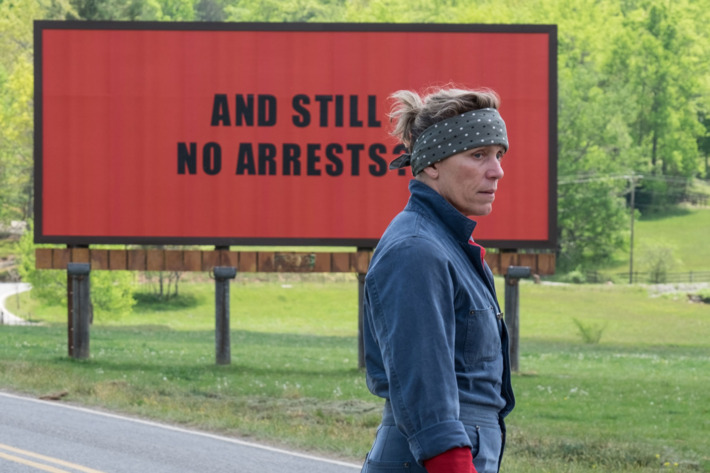
disappointingly entertained by...Three Billboards outside Ebbing, Missouri
There's two hours of my life I will never get back... and I am struggling to understand the message behind the pain, hatred, anger, rage, violence and onslaught of foul language... Is this really where we are at... celebrating the rough and dark depths of ordinary...
So let's step back and see where there might be some insights. Mildred's caustic language and behaviour sent her daughter out to walk along a dark deserted highway - where she met a nasty outcome - but somehow Mildred denies her partial contribution to this terrible tragedy and takes out her anger on the local police chief via confronting messages on 3 Billboards outside Ebbing, Missouri. The targeted police chief is dying from cancer and shares the truth about the unsolved case while she continues to berate him. There are glimpses of her pain but they are not that sincere or believable. She seems so tough and rough that she she is incapable of insight or regret. She hates her ex, makes life hell for her son and even treats the town's midget who covers for her terrible crime, with complete disdain.
And then there is the dark and shocking moral ambiguity of gratuitously violent crimes, rampant racism and vicious vigilantism without comparison or consequence. The only believable characters are nasty, ruthless, brutish and dim witted.
Saturday, January 13, 2018
an unexpected story... The Black Dress
I was given this book to read by a trusted colleague, who, on observing my work challenges, suggested I might relate to the description...a book about suffering and strength, religion and rebellion, love and anger. Many months later, I picked it up and started reading The Black Dress, by Pamela Freeman. It is a convincing story about Mary MacKillop, based on historical facts, of the eldest daughter of a Scottish immigrant catholic family in the mid 1800's. Alexander MacKillop left Scotland to join the seminary in Rome, but opted instead to become a god-fearing farmer in country Victoria, alongside his well educated wife Flora, who grew up in the foothills of the highest mountain in Scotland. We experience life from the perspective of Marie Ellen who experiences her father's educational aspirations while also feeling abandoned as he leaves the family and generally opts out of his paternal responsibilities. She experiences her mother's fatalistic 'god will provide' acceptance of their resultant poverty and as a reader we also have an insight into her personal anger, which would never have been appropriate at that time. The underlying question is the extent to which she can ultimately forgive her father, while carrying forward his religious fervour for her own life as an unconventional nun. Mary was clearly an independent thinker whose actions have had a lasting impact on rural children's education in Australia.
Tuesday, January 2, 2018
walking across the Sahara with Paula Constant
Why would an Australian woman walk across the Sahara with camels? The question was forming while I listened to Paula Constant in a segment of the Ubud Writer's Festival titled Incredible Journeys. She did not really answer my question in that session, but I did enjoy her style of story telling sufficiently to buy her book simply titled Sahara.
Having walked more than 3,000 miles from Trafalgar Square to Morocco, Paula starts this adventure at the western edge of the Sahara, with her husband Gary, planning to walk from the western coast to Egypt in the east. Initially the book is quite self-indulgent, but in a way, it has to be, because the decision making behind this adventure is not always logical or linear. However, Paula's honesty, careful descriptions and self-analysis are compelling.
She writes with amazing clarity and compassion about the people of the Sahara and compares cultures between the original Saharawi nomads, Arabs, Bedouin and Touareg, and especially between men and women. I really enjoyed beginning to understand the racial and tribal connections and the importance of the infamous tea ceremony. Paula hires local nomadic guides, initially to teach her about walking with camels and later to navigate the route and languages.
However, the selection and choice of guides is quite challenging, while offering her and the reader amazing geographical and cultural insights. The Sahara is really more than the barren sand dunes we all visualise. She walks through the countries of Morocco, Mauritania, Mali and finally Niger, where she had to terminate her journey for political and health reasons.
The story is ultimately one of Paula's struggle to address her innermost demons and take control of her journey, her camels, and the men she hires to guide her through the romantic "big empty" desert. Early on in the trek, her husband leaves and the dynamics change quite dramatically. She writes honestly of her physical, emotional and spiritual journey; sharing both her courageous and naive decisions. She describes the challenges of hidden landmines, political bureaucracy, extreme weather, bandits and corruption without complaint or dramatic exaggeration as these are the tools for her own self discovery. It is clear that she is not trying to be a super-hero, but just testing her abilities to their limits. Her adventure is strangely believable and I found myself experiencing with her, emotions of joy, heartache, inspiration, and despair.
I also realised that she found her own threshold of sanity and realised the power of the human spirit in all its guises. However, she is much more courageous and capable that I ever could be!
Finally, after finishing this book, I found 2 podcasts of Richard Fidler interviewing Paula about this journey and a TEDx talk 'The Power of Enough' where Paula shares her profound insights and acceptance of herself. She acknowledges the simplicity of accepting that she is where she is supposed to be, and that she is enough just as she is. I am glad that I found this because I realised her story was not about success or achievement but the process we all go through in one way or another or trying to be the best we can, but ultimately settling for accepting and enjoying our own authenticity.
Monday, January 1, 2018
Just to be sure...finding the extraordinary in the ordinary
What I love about french movies is the detailed depiction of ordinary lives with such detail that they seem extraordinary
Just To Be Sure is set in coastal villages of Brittany, and begins by contrasting a DNA test with a robot defusing WW2 bombs. Detonating bombs is a wonderful metaphor for the unexpected surprises throughout this film.
Erwan Gourmelon, played by Belgian actor Francois Damiens is a middle-aged widower with a feisty daughter, Juliette (Alice de Lencquesaing), who is very pregnant. She won't identify the baby's father as it was conceived during a one-night stand, and she does not want to hold him responsible. So the first big surprise is that following DNA tests for Juliette to exclude a recessive form of cerebral palsy, Erwan finds out that he has no DNA match with his father! To list out every personal challenge and dilemma along the way and highlight how they are often resolved in an unexpected way would only minimise the beauty in the everyday scenes and the seeming coincidences. Suffice to say, Erwan discreetly sets out to learn about and to find his father, who happens to be an elderly and very endearing man. He also seeks to seduce the elusive doctor, Anna, until he finds out who she really is... Erwan also facilitates Juliette to accept her baby's father and while many loose ends are resolved, it does not necessarily end happily ever after.
Saturday, June 3, 2017
aligned with...Things to Come
This is truly an escapist indulgent recognition of one woman's multiple midlife challenges. Because it is set in France, it is both believable and enjoyable in every aesthetic detail. We enter the world of intellectuals living in book lined apartments, with amazing linen clothing. This film, L'Avenir, translated as Things to come, has deservedly won the best director for Mia Hansen-Love at the 2016 Berlinale. It is an empowering film of the recreation of life from the pieces left in middle age...
Nathalie, played brilliantly by Isabelle Huppert, teaches philosophy to idealist and somewhat anarchistic Parisian teenagers. At home, she holds her 2 teenagers together with a distracted husband, and tends to her despairing drama queen mother. But her first bombshell reveals that her husband of 25 years is leaving her for a younger woman. She and Heinz are both philosophy teachers and books have been their bond; and the reason why she had thought he would always love her. "How naive of me," she reflects with resignation rather than bitterness.Another challenge is brewing, in that her publishers drop her intellectual work from their list because she's neither young nor hip enough to suit their new marketing plan. And then her mother dies, through succumbing to the depression that has haunted her for years. Nathalie also realises that while she was once a radical, her students are challenging her bourgeoise life. She has to recognise that one of her star students has grown beyond her, to the point of being critical of what she stands for. She does not wallow in self-pity, but rather relies on her intellect in the midst of the ultimate unfairness around her. One of my favourite lines is “I’m lucky to be fulfilled intellectually — that’s reason enough to be happy”. Nathalie does not need to find another partner to be fulfilled, and is in fact very alone in many of the dark nights both literally and figuratively. Somehow, in her solitude, she finds her freedom, but without those she thought she might share it with. Finally, the film provides a sense of hope through her emotional limbo; “So long as we desire, we can do without happiness". Somehow she finds strength in her vulnerability. And in this french genre, it is so utterly believable and strangely enjoyable.
Wednesday, May 31, 2017
Nostalgic and questioning...the Sense of an Ending
This film questions our personal meaning of life by comparing our remembered past with the stories we shape from it. We enjoy a wonderful snapshot of contemporary London contrasted against memories of school and university life in the 60's. We are challenged to test the veracity of our remembered life story, with others' memories and external objects of verification. Does time tinge our memories? Do we ever fully understand the consequences of our earlier actions.
The Sense of an Ending is based on the 2011 Man Booker Prize-winning novel by Julian Barnes. It contrasts how we live, with how we live to regret. The excellent British cast is led by Jim Broadbent (Tony Webster) and includes Charlotte Rampling (first love Veronica) and Harriet Walter (ex-wife Margaret).
Tony and his friends first meet the new boy Adrian at their Etonian type school. In a history lesson Adrian responds with the films' guiding message “History is that certainty produced at the point where the imperfections of memory meet the inadequacies of documentation". Believing they would be friends for life, the boys navigate parties and girls and it is not long until we realise that Tony loses his first girlfriend Veronica, to Adrian.
Tony’s current life alters when he learns that he has inherited Adrian's diary, as part of the inheritance of Veronica's mother! We follow him around London in search of the diary and he surprises his ex-wife Margaret with stories she has never heard. The only part of the diary he receives from Veronica is a spiteful letter he once wrote and Tony needs to unravel various incidents from long ago. Finally, as he becomes a grandfather, he realises the importance of valuing what he has, in his ex wife, daughter and grandson.
Saturday, April 1, 2017
Helen Garner's The first stone - over 20 years later
I was living in England when the event in 1992 occurred and was not that interested in reading this book when it was published in 1995. Now, more than 20 years on, I was handed the book, as an interesting read, by a trusted book clubber. I was therefore quite naive about what I was reading!
The First Stone opens to the police interview of the Master of Ormond College, in relation to sexual harassment charges made by two students during a fairly jovial party after their valedictory dinner. It seems there was a delay before the girls reported the incident to the college and then the police. Despite being acquitted on two occasions, the Master resigned in disgrace without future career options. It seems that Helen was a critical observer to a highly charged and divisive situation - and she wanted to find out more about the motives of the key players.
She wrote to the Master of Ormond, named by her as Colin Shepherd, and received some insights into his family life and career. She tried to interview the two girls, without success, and many people have since accused her of writing an anti-feminist story, and 20 years later, are still doing so!
I am quite bemused because the story to me was so much more about power and class then merely gender. Ormond was a replica Oxbridge college that had recently modernised as a co-ed college. Sometimes Australians are more critical of class than the English themselves, who seem to accept it as part of life. While in many ways Australia is a classless society and there are multiple opportunities for self-improvement, there are still bastions of the English class system that are even more entrenched than in the motherland. Perhaps the University of Melbourne is one of them!
So, for me, it seemed that Colin had tried too hard to be the congenial, compassionate and egalitarian Master in a hierarchical and historical class system. Somehow, the girls and their secret supporters fought a nasty and public battle where they moved around the classic victim's triangle, from victim to persecutor and then to rescuer. Along the way they gathered support from feminists, lawyers and the academic establishment. At no time, was there any sense to question the Master's actions apart from assumptions of evil intent. This is what has scared me the most. In gender and politics, there are many grey areas, where with some patience and compassion, individual behaviours can be understood, rather than escalated. I think Helen tried to bring this out in her book, by describing stories where most women have managed advances from men, that while flattering may have been unwanted. In many ways, the success of women is built upon their ability to do this with some respect for themselves and for the other person.
Further, there is always a decision to escalate and that concerns me the most. Normally, in escalation we are seeking a higher level of moral conscience. Perhaps we are looking for exoneration for ourselves and punishment or at least acknowledgment by others. Helen and myself, as her reader, seem ignorant of when and why the decision to escalate was made. I think in trying to understand this, she was accused of being anti-feminist. But it seems to me, that the feminists were selling themselves out to the establishment and expecting the law to enact gender equality in one of the most inequitable corners of Australian civilisation.
Garner reflectively questioned why the girls delayed their accusations, why they joined forces and whether they really had taken responsibility for their own behaviours. To me this seemed appropriate but to the feminists it was proclaimed outrageous.
I really wonder whether the girls innocence and naivety was played by the feminist card. I saw a similarity to whistleblowers in office politics, where they try and use anti-bullying policies. In both situations, playing the victim, even with a sense of moral rightness, does not pay. No matter how civilised our society, we cannot legislate for fairness between sexes, classes or even managerial behaviours.
Reading this book has really emphasised to me, the need for all players in any situation of real or perceived conflict, to carefully review their own contribution to the situation and to decide to act with power and responsibility. I accept that in some situations this is very difficult to do, because of significant power imbalances and altered perceptions. However, I wonder what would have happened if the girls had been coached to reflect on what had happened, facilitated to question the intention of their Master and then decided to behave differently.
Thursday, March 30, 2017
Moonlight - a tale of sympathetic dichotomies
I cannot say that Moonlight was in my top 10 movies to see this year - but having won an Oscar for best picture, I thought it would be worth seeing - so I joined my usual arty meet up group on Sunday afternoon. I must admit that I was quite tired walking in, having read my book over lunch time and I was perhaps a bit too relaxed to fully get into this movie. It is quite slow and sometimes tedious as we meet the young black school boy Chiron, who is very introspective. He seems both vulnerable and shy and it takes us a while to begin to understand. His mother is seeking escape through drugs and it is not clear whether he is being bullied or that he just does not fit in. I am not sure that I would have picked up his sexuality issues if I did not know - he seemed genuinely unsure as a school boy and even a teenager about why he did not fit in with his friends. This may have become more difficult as he befriended Juan, his mother's drug dealer, and they had an almost father - son relationship. There were perhaps a few too many contradictions and inconsistencies, but I guess that might just be life as experienced by a fragile gay boy in the testosterone driven black drug scene.
It is almost inevitable that he joined those who destroyed his mother's life, but the ending does hold out some hope, if you are feeling positively inspired....
Sunday, January 15, 2017
captivated by India Between the Assassinations
This second book by the Man Booker-winning author Aravind Adiga, is written as a travel guide of short stories within a fictional Indian town of Kittur, between the assassinations of Indira Gandhi in 1984 and her son Rajiv in 1991. Over one week, the reader is taken to all the important areas and introduced to everyday individuals who are trying to eek out a living within the cultural mixing pot of traditional and post-colonial India. At first, the cultural complexity seems to be the key point of difference; the caste system, the blatant corruption, abject poverty and the arrogance of wealth. But slowly each story tells of the eternal human struggle, to be the best person you can, amidst the universal apathy, greed and despair. And in tune, the complex physical surroundings are carefully described as being anything between strikingly beautiful and pungently filthy. Minute details are explained so that it is easy to feel as though you are there in the middle of it all, with an understanding of why things happen the way they do...
Kittur symbolises the universal crossroads of our civilisation, between naive enthusiasm and endemic corruption, the brightest, most educated and those unable to read, the downtrodden and greedy, and the crazy rich and unimaginably poor; all within the spiritual and cultural complexity of modern day India.
We meet upper-caste bankers and lower-caste rickshaw pullers, Muslim tea boys and Christian headmasters, capitalist factory owners and communist sidekicks. Each character has their own story which gradually emerges. First of all we meet 12 year old Ziauddin, one of "those lean lonely men with vivid eyes who haunt every train station in India". Then there is Ramakrishna "Xerox", who has been arrested 21 times for selling illegally photocopied books to students; Shankara, the mixed-caste Brahmin-Hoyka student, who sources products from the underworld to set off a bomb in a Jesuit school to protest against the caste system; Abbasi, the idealistic shirt factory owner, who offers drinks laced with his own shit to corrupt government officials; Mr D'Mello, an assistant headmaster who desperately tried to keep his favourite student away from the pornographic cinema in the middle of town; Ratnakara Shetty, the fake sexologist, who sets out to find a cure for a young boy with venereal disease; the Raos, a childless couple who seek refuge within the forested outskirts of the town and their own circle of social intelligentsia who cannot help mocking them; Keshava, the village boy who achieves his aspiration to become a bus conductor; Gururaj Kamath, the newspaper columnist who incessantly "looks for the truth"; Chenayya, the cycle-cart puller who "could not respect a man in whom there was no rebellion"; Soumya and Raju, the beggar children on a mission to buy smack for their drug-addict father; Jayamma, the sixth daughter for whom her Brahmin father could not afford a dowry, who seeks comfort in DDT fumes; George D'Souza, a mosquito-repellant sprayer who systematically elevates himself to gardener, then chauffeur of a lonely rich Mrs Gomes, before he loses it all by trying to be someone else; and Murali, the loneliest member of the Marxist-Maoist communist party who falls in love with the poorest young woman in dire circumstances. He cannot afford to marry her and must concentrate on developing his skill for writing stories about real people who want nothing.
The book is a compulsive read, if only for a sense of hope at the end. Perhaps the resounding message is the simplest, to appreciate what we have...
travelling with the surreal Passengers
I felt the need to escape reality and chose to see this romantic sci-fi drama of a spaceship full of frozen people heading off to start a new life. It was a combination of a futuristic space machine and a super tech cruise ship, with 5000 passengers in suspended animation for 120 years. As if we could ever get that technical accuracy! But the movie did not disappoint. It was entertaining in every way. The meteor hits and Jim (Chris Pratt) is awakened 90 years too early. Despite using his engineering skills to exploit every luxury on board, he becomes very lonely and bored and he is challenged to wake up the lovely Aurora (Jennifer Lawrence). His dilemma is shared with the android and very humanoid barman. There is quite a charming moral story about the fact that we can't always have what we want, and if we do, then we can't recognise or appreciate it until its too late, or almost too late! There are some brilliant visual effects of a swimming pool that bubbles out into space and the idea of a corporation running this scale of tourism is quite quirky.
The myth of Jackie
I was uncertain about seeing the film Jackie; would it be a historical documentary, a piece of american propaganda or something more than that? I should have realised that the Chilean director, Pablo Larrain, would not have grown up in America, surrounded by the Kennedy myth. Instead, he created a visual and emotional masterpiece, that covered the first few days after John F. Kennedy’s assassination, in November 1963. Jackie Kennedy was being interviewed for her lived experience and we were transported back to key events. She introduced the Camelot myth – in which he was an old-fashioned but tragic hero. But in reality she must have been in shock, some say PTSD, and was trying to honour her husband and country and be a mother to their 2 young children. The film has an amazingly discordant sound track contrasted by beautiful dresses and set design. Natalie Portman plays the emotions honestly and believably, and as she communicates with the priest, played by haunting and elderly John Hurt, she displays both her determination and vulnerability.
Sunday, January 1, 2017
magical: All the light we cannot see
This novel offers a brilliant life affirming reading experience. It is a magnificent feat of creativity inspired by research for the multiple award-winning author Anthony Doerr. It is such an intricate weave of 2 young lives in 1940's Europe; a resilient blind French girl and a smart German orphan, whose life paths move towards their fleeting meeting in occupied St Malo at the end of World War II. They are both so amazingly strong and adept at surviving through challenges most of us would never consider possible. Before the war, Marie-Laure lives with her widowed father in Paris near the Museum of Natural History, where he works as the master lock smith. She is blinded at six and her father whittles a wooden miniature of their neighborhood so she can memorize it by touch and navigate her way home. At twelve, the Nazis occupy Paris and she flees with her father to the walled Saint-Malo, to the sanctuary of her reclusive great-uncle. They carry with them what might be the museum’s most valuable and dangerous diamond; even they do not know if it is real or one of the 3 fakes created to deter the Germans.
At the same time, in a northern German mining town, Werner grows up with his younger sister in an isolated orphanage. He seeks escape through his fascination with and skills in repairing radios. While he is excited to earn a place at an elite training academy, his sister has premonitions of its futility. As he tracks the resistance, Werner realises the human cost of his intelligence.
The sensitivity of the meeting between Werner and Marie-Laure at the final stages of the war is truly tragically romantic. And in the final few chapters, it is wonderful to read forward to current times and realise the intergenerational beauty of such an amazing connection. There can be goodwill created in the most dire of circumstances.
Saturday, December 31, 2016
the underbelly emerges in The Dinner
This book takes the reader along to a popular restaurant in Amsterdam with two brothers and their wives for a summer evening 5 course meal. Paul, the narrator seems like a calm and observant family man, who is somewhat in awe of the publicity his brother is receiving as a future prime ministerial candidate. While there are the usual brotherly spats, what we don't fully realise is the reason for the dinner; a discussion about their 15 year old sons should but does not really happen, and probably would never have been a discussion. We quickly realise there are no polite happy families and the horrific behaviour of both boys may not have just been a coincidence. They were caught on a grainy CCTV camera and are recognisable to both parents - but there are differences of opinion about what to do next. There is also the threat by the older adopted brother to release a youtube video.
Throughout the first few courses, we begin to appreciate Paul's sinister and violent underbelly. While the promise of a diagnosis is confusing, it probably does not matter whether he has a personality disorder, Aspergers or is a sociopath. What is important is that there is a genetic link and that medication could be helpful, if taken as prescribed. It is also quite shocking to realise that Paul's wife is fully aware and not only accepts but covers for her husband and son. It seems inevitable that this boy has amazing capacity for violence, which his father is slow to recognise. By the end of the meal, it is clear that decisive action is needed, and violence seems inevitable...
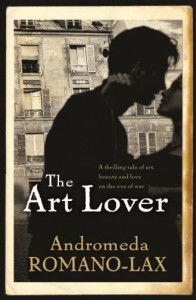
An enjoyable experience, reading The Art Lover
This was a book and an author I have never heard of - but as friends' recommendations goes, it was a good one!
The author, Andromeda Romano-Lax has a Greek first name, Italian and German heritage, and she married into a Jewish family. She grew up in Chicago, worked as a travel writer and freelance journalist before becoming a writer and living in Anchorage, Alaska. It seems this book unpacks something about individuals' search for meaning in Europe between the wars.
The novel opens in Munich in 1938, where an introspective young German, Ernst Vogler is learning to make sense of the present by understanding Greek and Roman art. He works on the Sonderprojekte, which is a quest by Hitler, to amass European masterpieces, to promote human strength and beauty in natural settings.The book opens with the disappearance to Dachau of his artistic mentor, but he is given a book and a personal story, which match and underpin his work project. He is sent to deliver the classical sculpture "the discuss thrower" from Rome to Germany.
This simple plan slowly turns into a dangerous detour of deception, corruption, lies and murder, across the beautiful Italian countryside. Ernst is both naive and unprepared for the situation that evolves, largely involving twin brother drivers being chased by a greedy German diplomat. There is sufficient depth of character of the three young men who share the front seat of the truck while the sculpture is hidden in the back. Gradually, the Italian family life emerges and it is not surprising that Ernst realises a few days in Italy can change his life; the advice given to him by his mentor! The elder sister's story matches his own in strange ways and he learns more about himself as a result. Then it is quite a treat to read forward 10 years to when he is tasked to return the sculpture to Rome and he revisits the Piedmontese hillside where the family lived...
Thursday, December 29, 2016
The Fencer emancipates Estonian children
The Fencer is a Finnish-Estonian-German coproduction based on the true story of Endel Nelis, a championship fencer who worked as a sports teacher in Haapsalu, a small coastal Estonian town.
It is important to know that the Soviets occupied Estonia in 1940 and drove out the Nazis; but also persecuted the Estonian men who had been forced to join the German army. Many were executed or sent to Siberia, so the small towns were populated by children without fathers. Estonia only regained its independence in 1991.
Back to the film, and just after the war, Nelis (Mart Avandi) arrives as the new sports teacher. The suspicious principal (Hendrik Toompere) remarks that fencing is not a proletarian sport, and therefore not suitable for the children. After his attempt to set up a skiing club is scuppered by the army taking all his equipment, and he is observed by young Marta practicing, he sets up a Saturday fencing club. It is great to see the children and later the parents supporting their development and expressing themselves; they start using branches as foils and only gradually acquire donated equipment. There is a back story that Endel fled Leningrad and he must make a difficult choice as to whether to support his team in the national fencing tournament in Leningrad.
There is a real sense of despair and depravation, that is somehow mediated by individual focus and achievement in the structured sport of fencing. We see a few children liberated by their ability to compete, despite a lack of practice and equipment. There is also a desperation mirrored in Endels who is clearly running away but has also learned to love and inspire the children to do their best.
Wednesday, December 28, 2016
Allied: thrills and dangers of life and love
This is a wonderful escapist World War II romantic thriller, produced by Robert Zemeckis. The film opens in Casablanca, with 2 spies played by Brad Pitt and Marion Cotillard. Max, a Canadian wing fighter is introduced to Marianne Beausejour, a French resistance fighter. They are given orders to pretend they are married and there is a dramatic irony in how they behave as if they are in love. Cinematography is excellent, with gorgeous sand dunes contrasted against high class parties. The costumes take us back but in a smart and sassy way. The war is an enduring background, and the common German enemy is ever present. The romantic drama is mirrored against some tricky espionage work, a baby being born in the middle of the London Blitz and then the real twist, where it is difficult to decide who or what to believe. Perhaps it also mirrors some the real life challenges for Brad. Nevertheless, I was mesmerised and ever so thankful to be able to walk out to a normal peacetime life!
Sunday, May 15, 2016
the film Sherpa packs a punch
I made it to the final screening at the Gold Coast Arts Centre, of this Australian docudrama. The film documents the lead up to and events following a massive avalanche in the Khumbu icefall in April 2014. Australian climber and film-maker Jen Peedom was filming in the region, when thirteen of the dead were Sherpas. This natural disaster released an explosion of unresolved tension built up by years of inequality by western commercial climbing companies. From the outset, sherpas were crucial in the success of western summiteers. Edmund Hillary could not have summited without Tenzin Norgay. Yet Tenzin was never given the same respect as Edmund and this pattern has been repeated over the years. The absolute difference in journeys through the extremely dangerous Khumbu icefall says it all; western clients do it twice while the sherpas may cross between 20-30 times a season. It seems that foreigners can pay out the risk so they have the luxuries they need for their climb. Further, the Nepalese government is taking up to 30% of the profits without delivering pensions or support for the sherpa families. The sherpas realised their power and closed the everest climbing season.
Subscribe to:
Comments (Atom)