Tuesday, December 9, 2014

a panoramic view from The Shard

We were so lucky to visit this new London skyscraper on a sunny morning in December. Every other day in the preceeding week had been grey and damp. I could imagine the foggy vista of nothing. But I am reminded of the power of sunshine and blue skies. It transforms all those dark buildings into a thriving metropolis. The roads and trainlines resemble the arteries and veins, threading their way throughout the city.
I loved seeing the long white overground trains crawl like snakes up to and across the Blackfriars Bridge station. It was also great to pick out classic buildings, like St Pauls and Buckingham Palace. The River curves between east and west. There is still a lot of building in the capital; the expanded Tate Modern and many new glass skyscrapers are still growing in the city.
Finally, I loved the shadows and reflections on the water. I also enjoyed walking up the last 2 flights of stairs to feel the power of the wind on the open air platform on the 71st floor. I loved seeing the tips of pointed glass just above us, and looking into the windows of a BA plane flying past! It was not difficult to decide to extend our visit to investigate the restaurants on the 31st floor. Our luck continued and we were able to eat at a cancelled booking, in a corner table at Aqua Shard. The purple and brown decor served as a warm backdrop to the city views. Service was brilliant, as was the food and wine - a truly memorable experience.

Sunday, December 7, 2014

Egon Schiele recognises vulnerability

I am unsure why this exhibition of Egon Schiele's drawings at the Courtald Gallery is titled The Radical Nude, except that Victorian attitudes of nudity must still be present in English society. The power of these skilful drawings for me was in their sensitivity and honesty. The crisp and delicate lines reflected hidden muscles so faithfully and delicate pastel colours reflected unusual skin tones. In all, there was a deep respect for his models, including himself and his family. I did not succomb to the predominant propoganda message of ugly, gaunt, perverse street life. Instead I came away with a small cameo of an artist wanting to share his personal life at the turn of the century in Vienna. Yes, he was working with other great artists like Gustav Klimt and Oskar Kokoshka, who were also keen to break with tradition. But personally, I am sorry about his early death, three days after that of his wife, during the influenza epidemic of 1918. I wonder what he could have achieved had he lived a longer life?

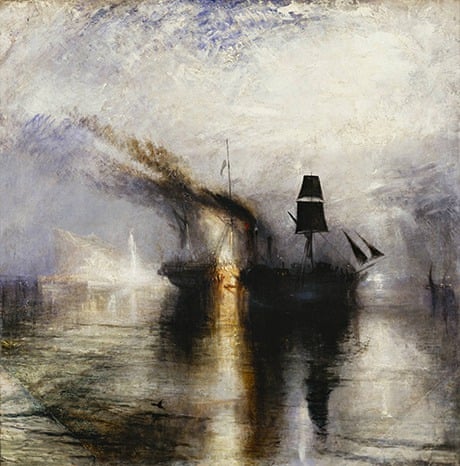
Late Turner: impressed by explosions of colour and texture at Tate Britain

Perhaps it was good to be primed by the movie, which I thought was disappointing. I was hoping that Turner's real art might be different and this time I was truly impressed. Tate Britain had expertly curated 6 large rooms of his late works; painted between 1835-1851. It was a visually and emotionally stunning array of large mounted watercolours, complemented by many quick drawings on paper. It was difficult to imagine an established artist in his 60's and 70's creating these controversial masterpieces, although in retrospect it is clear that he broke with tradition, and was therefore misunderstood at the time.
Each room was visually stunning and closer inspection of many pieces revealed Turner's multiple talents. He was able to combine palettes of blue-brown-cream oceans or landscape combinations as creatively as orange-gold-pink sunsets. Generally, he overshadows individuals and small villages with enormous skies; some convey idealistic and romantic sunsets while others are in the eye of a storm or in the midst of steam or fog; and there is often a hidden light shining through. In many pictures he skilfully draws in foreground and middle ground scenes, and many are partially obscured, as if looking through a window. I particularly liked his delicate scenes of European mountains, valleys and lakes, and rather dismissed his chintzy reproductions of the great mythical narratives.
It was also clear that, as a wealthy English artist and businessman, he had the means to travel to Europe and convey the grandeur of cities such as Venice, alongside Swiss mountains and lakes. He perpetuated the romance and enigma of the continent, with his tonal pallets of translucent watercolours. He also relished the opportunities to convey the colour and energy of real fires in the Tower of London and Houses of Parliament!

Monday, November 24, 2014

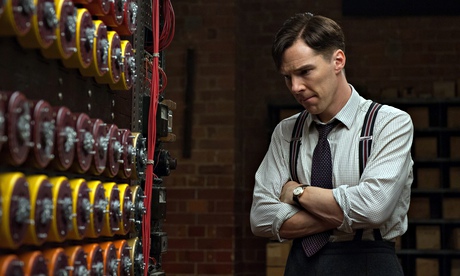
A genius exposed in The Imitation Game

This has to be one of the best films I have seen in ages, on so many levels. The story is complicated; Alan Turing is a seiously talented mathematician who ultimatly breaks the Enigma code to fast track the end of WW2; he models the basics for computing and artificial intelligence, and yet was chemically castrated for being gay. Equity was a non-issue, rather the brilliance of diversity shone through. While he was a true genius, in a nerdish way, Alan was also clearly on the autistic spectrum. He was emotionally independent of others, and he was so focussed on building his machine that he considered it his best friend. The acting was also superb; Benedict Cumberbatch plays Turing in such a convincing way, that we believe in him totally. Instead of focussing on the ultimate tragedy of his life, we are captivated by his brilliance and the way he works with a small group of similarly talented geeks. He was also gently influenced to be more likeable by the subtle attentions of Joan Clarke, his fiancee, overacted appropriately by Keira Knightley. I really enjoyed one of the film's guiding mantras: “Sometimes it is the people whom no one imagines anything of who do the things that no one can imagine.” So true that I want to find out more about Alan Turing and his enormous legacy to our world today!

Sunday, November 23, 2014

Ladies lunch at l'Ortolan

It was great to be invited to save up for a splendid annual meal, and to have chosen l'Ortolan, a restaurant just outside Reading with a long history of French chefs and Michelin stars. We set off early from Oxford, driven in limousine comfort. On arrival, we enjoyed champagne on the Chesterfield in the large bar. It was complemented by wasabi popcorn, blue cheese shortbreads and deep fried haggis balls. I am so glad we opted for the 7 course gourmand menu with fine wines. The food range is too great to be described here; except to say we enjoyed fresh passionfruit, crab, scallops, venison and over 20 different cheeses. They were all delicately presented and the flavours and textures were complimentary. As was the impressive glass of wine with each course, brilliantly introduced by our French sommelier. It was such a shame to stop eating, so we extended our meal with a digestif and coffee; always a good end to a great experience. And then the walk past a giant fish tank which bordered the impressive aluminium open kitchen, to the toilet was a pleasant parting surprise!

Ai Weiwei complements Blenheim Castle

The more I see of his work, the more impressed I am. Ai Weiwei is an artist with a strong political message and a capacity to engage people across the world. While under house arrest in China, he used digital photographs to create modern installations to both complement and challenge one of England's most stately homes. Over 50 art works are displayed inside the palace and throughout the grounds. It is a little like a game of hide and seek, with a written answer sheet; although at times it helps to ask the guides to offer a more detailed explanation. There is a most stunning chandelier in the entrance hall, which kind of mirrors the large gold christmas tree; then in the bedroom where Winston Churchill was born there is a set of hand cuffs on the bed and a golden wire coat hanger twisted into Winston's profile on the wall. The dining hall has a fully set table in gold and white crockery, complemented by large golden busts of the 12 chinese astrological animals. And in one of the last rooms, there is a large bowl of single pearls; which are just out of reach! Outside he has set up patterns of large blue ceramic ovals in lines on the lawn, and hidden several pieces in the secret garden. It is such a great way to appreciate contemporary art within a living castle...

Effie Gray...a story behind the art

It is interesting when 2 films are released at the same time now about artists who were alive at the same time then. Compared to Mr Turner, which I have already criticised for lacking a narrative, the film Effie Gray provides us with the narrative behind John Ruskin's life, so we can appreciate the art and the people who are not only the physical models but the psychological contributors. Perhaps, it is because Emma Thompson has scripted this film to contrast upper class Victorian society with Effie's unconsumated marriage. We assume now that love and sex were the dark underbelly of a very prim and proper society; and that artists were perhaps best placed to capture and share this in their work. However, this film shares a very personal, but contrasting story in a respectful way. We see Effie, played by Dakota Fanning, try to uphold her social status in the claustrophobic family of John; he is the only cherished son, responsible for his father's legacy but emotionally ruined by his overbearing mother, played by Julie Walters. She sees a glimmer of humanity in Lady Eastlake, played by Emma Thompson, as the wife of the President of the Royal Academy, and shares her personal vulnerability. She also develops a real relationship with John Everett Millais, one of John's proteges and an accomplished pre-Raphaelite painter. I really felt for her, ignored by her husband, and increasingly adored by his best friend! So it is somewhat confusing to call this a love triangle, as history has done. However, there is some resolution as Effie seeks annulment of their marriage and she can become more than just an artist's muse.